A solar-powered
micro data center.
SolarNodes is a test platform for carbon-neutral AI compute. Node 01 is a used 20-foot shipping container at a remote location, converted into a solar-powered micro data center to validate that open models can run without grid power or fossil fuel backup.
From shipping container to micro data center.
Node 01 began as a standard used 20-foot ISO shipping container, the kind that moves cargo across oceans and then sits in a yard. We bought one, cut it open, and rebuilt it from the inside out to house compute, battery storage, networking gear, and the power electronics that tie it all together.
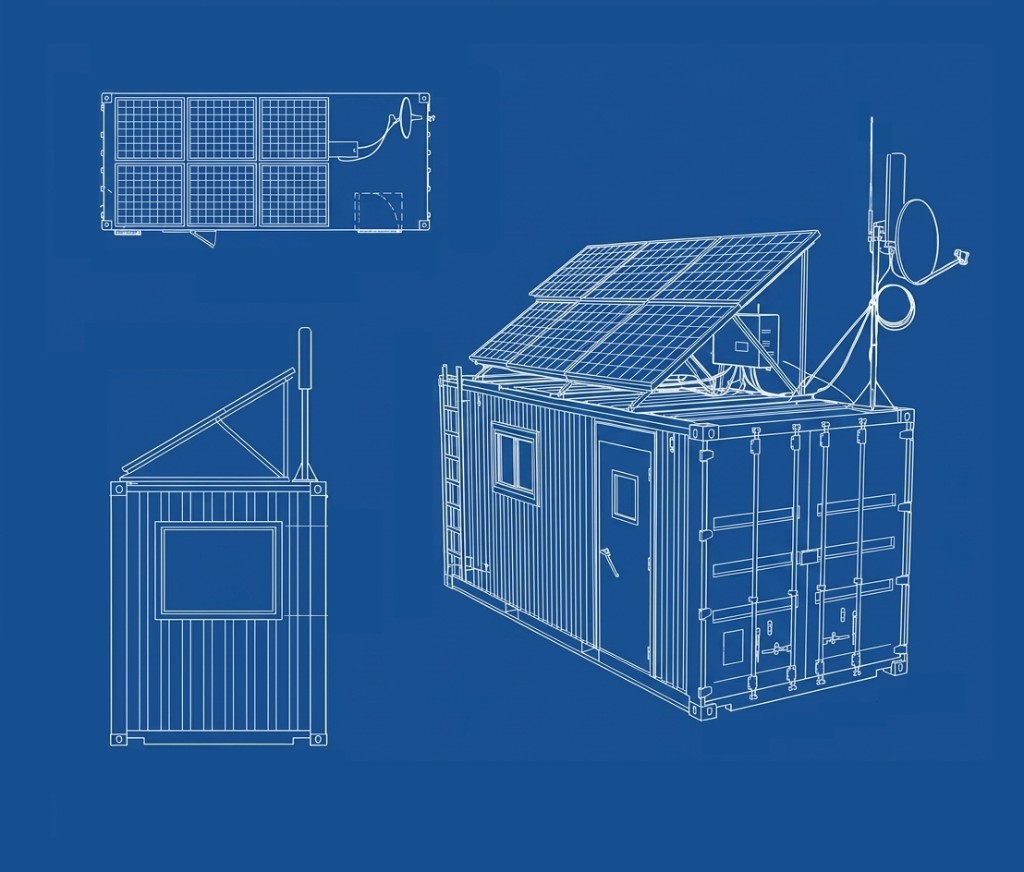
Structure & layout
We insulated the steel shell, sectioned off a clean zone for the electronics, and ran ventilation and wiring end to end. The result is a sealed, climate-controlled enclosure built for continuous compute workloads.
Solar & storage
Solar panels on the container roof send DC into standard charge controllers, inverters, and a battery bank, sized to keep the rack running overnight and through cloudy stretches.
Compute
Compute runs on a cluster of Ryzen AI Max+ 395 systems running open-weight models for inference. The hardware draws hard when it runs, so every watt is accounted for, scheduled against solar yield, and buffered by batteries.
Power, cooling, and connectivity had to work first.
Deploying compute in a shipping container at a remote location required solving for power, thermal management, and connectivity constraints that conventional data center designs assume away.
Zero impact connectivity
The site has no fiber run and no cell tower in line of sight. We deployed a point-to-point wireless antenna to beam a high-bandwidth link across the valley to a relay with backhaul, building our own last-mile network so the container could serve API traffic without trenching cable to the site.
Insulation & cooling
A steel box in direct sun is a greenhouse. We insulated every surface, including walls, ceiling, and floor, with closed-cell foam to stop thermal bridging, then built a ducted cooling system that pulls outside air through filtered intakes and exhausts hot air from the compute rack.
Load balancing & optimization
Power and compute don't scale together. Solar peaks at noon while API traffic doesn't follow the sun. We monitor battery state and solar yield, then throttle or schedule workloads so the cluster stays online without drawing more than the array and batteries can supply.